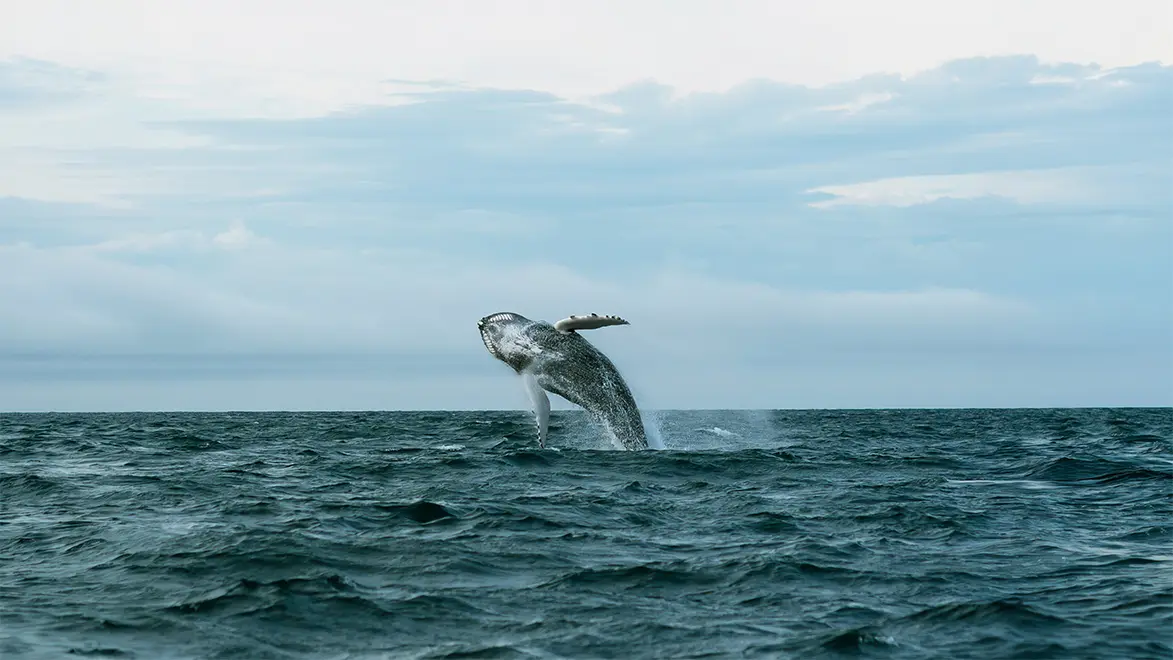
Just a stone’s throw from the coast, sperm whales, the largest toothed whales in the world, surface from the sea. That’s exactly why Andenes has long been considered one of the best places in the world for whale watching. The village lies just north of the Lofoten Islands, at the northern tip of Andøya, and travelers often recommend it as a highlight of their trip around the Lofoten Islands.
In this article, you’ll find everything you need to know about whale watching in Andenes: why whales come so close to the coast here, when you have the best chance of spotting them, and what else you can experience in this rugged fishing village.
Tips from the Lofoten Nomads team
- Book your whale-watching trip in advance: boats fill up quickly in July and August. If you’re travelling with the experts at Lofoten Nomads, you can easily add whale watching to your trip without having to worry about a thing.
- Dress in layers, even in summer: it’s always colder out on the open water than on shore. If the sun isn’t shining, it can feel bitterly cold at sea.
- Prone to seasickness? Take a tablet beforehand and choose a seat in the middle of the boat.
- Bring binoculars and a camera with a telephoto lens. Whales often surface only briefly before diving deep again.
Where exactly is Andenes?
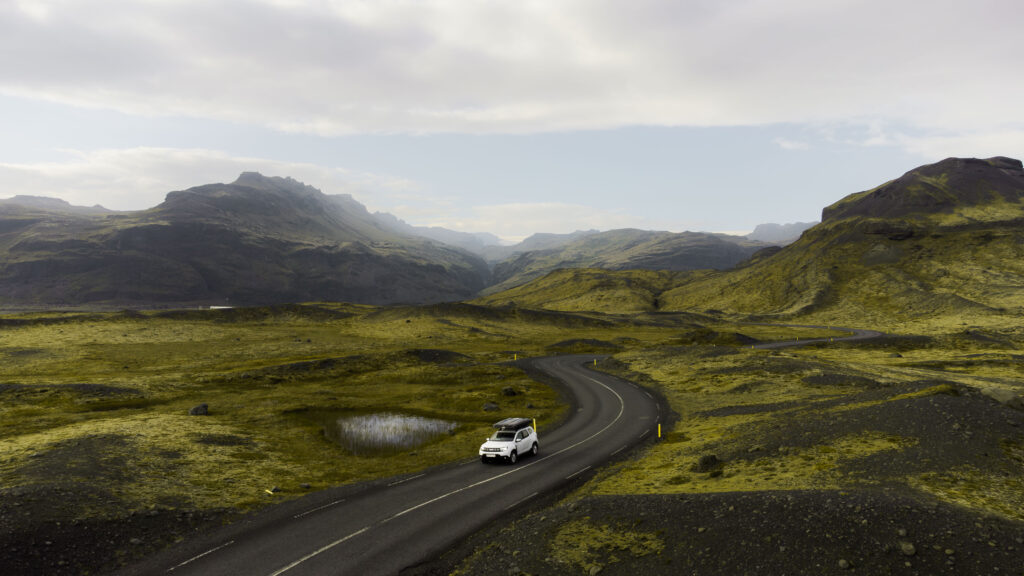
Officially, Andenes is not part of the Lofoten Islands, but lies on the island of Andøya in Vesterålen, an archipelago just to the north. Still, if you’re travelling through Norway’s Lofoten Islands by campervan, it feels like the logical next stop: from Fiskebøl, a half-hour ferry ride takes you to Melbu, after which you continue north towards the island’s northernmost tip.
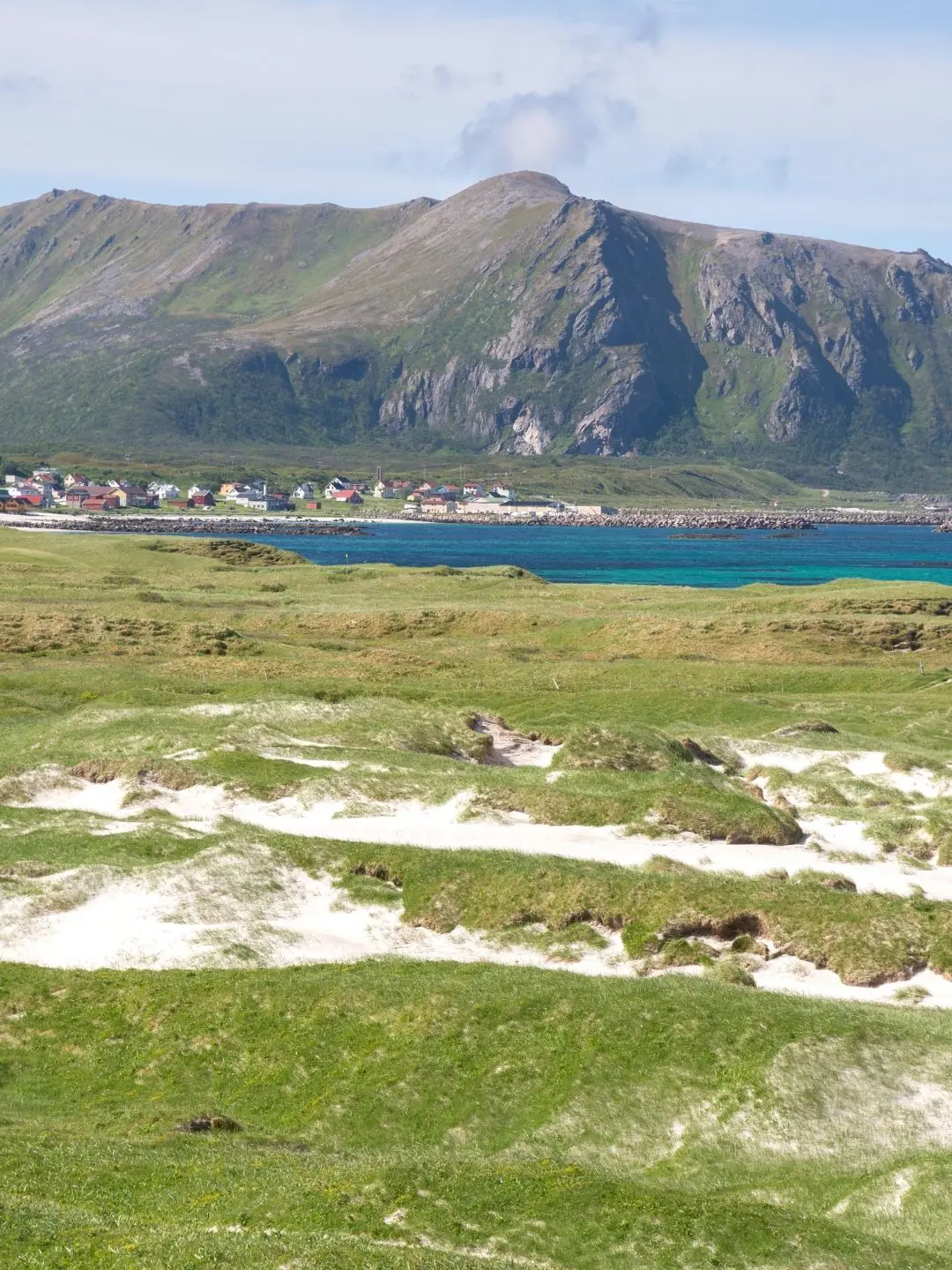
Allow more time than the map suggests, as the coastal road constantly tempts you to stop for photos. Andenes itself is a compact fishing village of around 2,000 residents, surrounded by water on three sides, with a harbour that sets the scene for almost every boat trip.
Andenes whale watching
Why this is the perfect place for whale watching
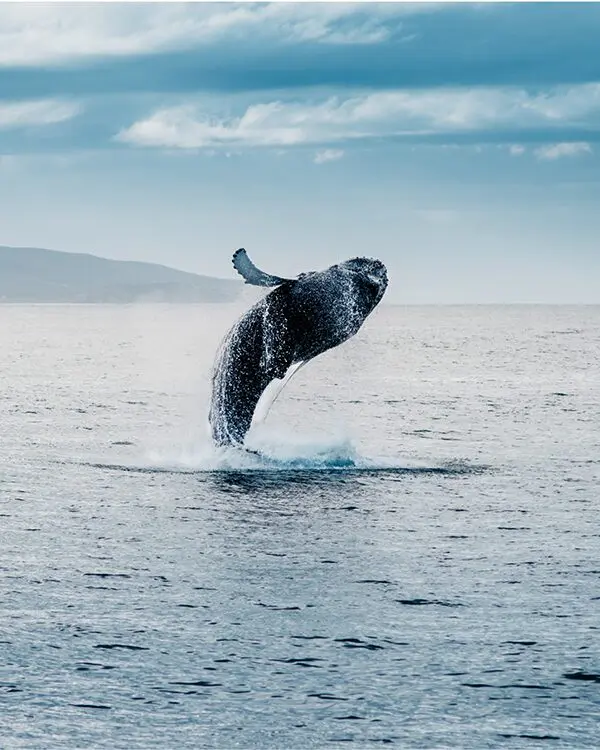
Just off the coast of Andenes lies Bleik Canyon, an underwater gorge that plunges from shallow water to more than 1,000 metres deep within just a few kilometres. This transition creates nutrient-rich currents, attracting sperm whales for most of the year, although most tours run from May to September. With a bit of luck, you may also spot orcas, minke whales, dolphins and porpoises.
A typical whale-watching tour in Andenes lasts three to five hours, depending on where the animals are swimming that day and how the sea behaves. Because sperm whales hunt so close to shore, the journey is usually shorter than on similar tours elsewhere in Norway. Sightings are never guaranteed – this is the wild, after all – but your chances of spotting these remarkable giants in Andenes are among the highest in the world. For many travellers, seeing sperm whales is the absolute highlight of their trip through the Lofoten Islands and Andøya.
The perfect time for whale watching in Andenes
The best time to spot whales in Andenes is during the summer months, from May to September, with July and August offering the best chances. At that time, the nearby deep underwater canyon (Bleikdypet) is rich in food, so you're very likely to see sperm whales.
Summer is generally the best time for a (first) road trip through the Lofoten Islands too: the weather is ideal, and the midnight sun lets you explore for as long as you like.
More things to do in Andenes
If you're driving this far on a road trip through the Lofoten Islands, it's worth planning an extra day to spend in Andenes. Besides whale watching, here's what else you can do:
- Andenes Lighthouse: the 40-metre-high, bright red lighthouse, built in 1859, is the village's symbol. In summer, you can climb it as part of a guided tour.
- Bleiksøya: a steep rocky islet just off the village of Bleik, where thousands of puffins nest.
- Bleik Beach: kilometres of white sand, described as one of the longest beaches in Northern Europe.
- Måtinden: a challenging hike of around two hours, with one of the best views over Vesterålen.
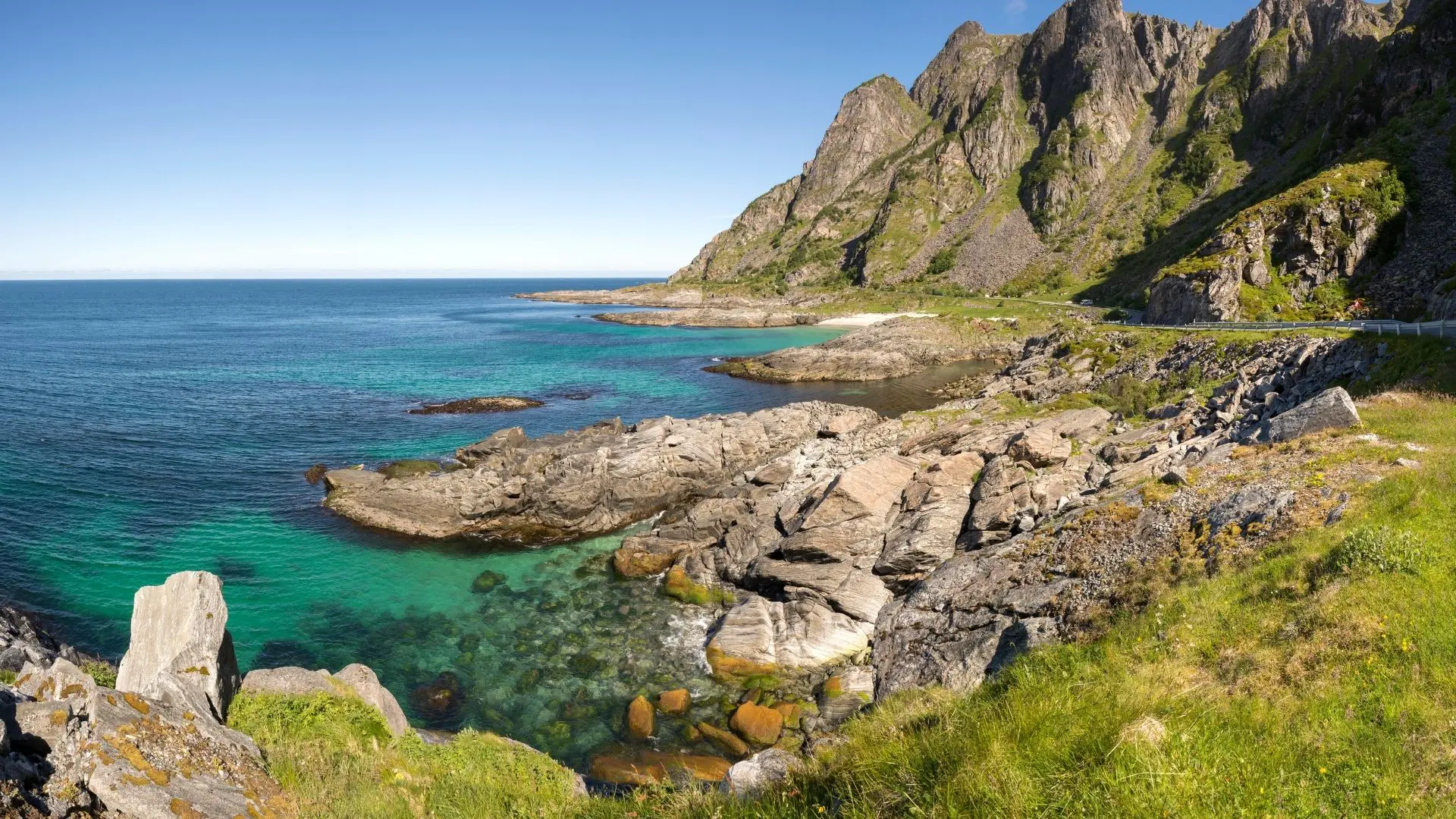
Fit Andenes into your Lofoten road trip
Andenes lies just beyond the Lofoten Islands, but those who make the trip are rewarded with an encounter that comes closer than anywhere else. Add an extra day or two at the end of your route and combine whale watching with the lighthouse, the beach and the puffins. Once you've seen a sperm whale dive just off the coast, you'll understand why Andenes whale watching features on so many bucket lists…
Not keen on putting the puzzle together yourself? With Lofoten Nomads, you can book a 7-day self-guided road trip including a campervan, a planned route, accommodation and equipment from just €920.