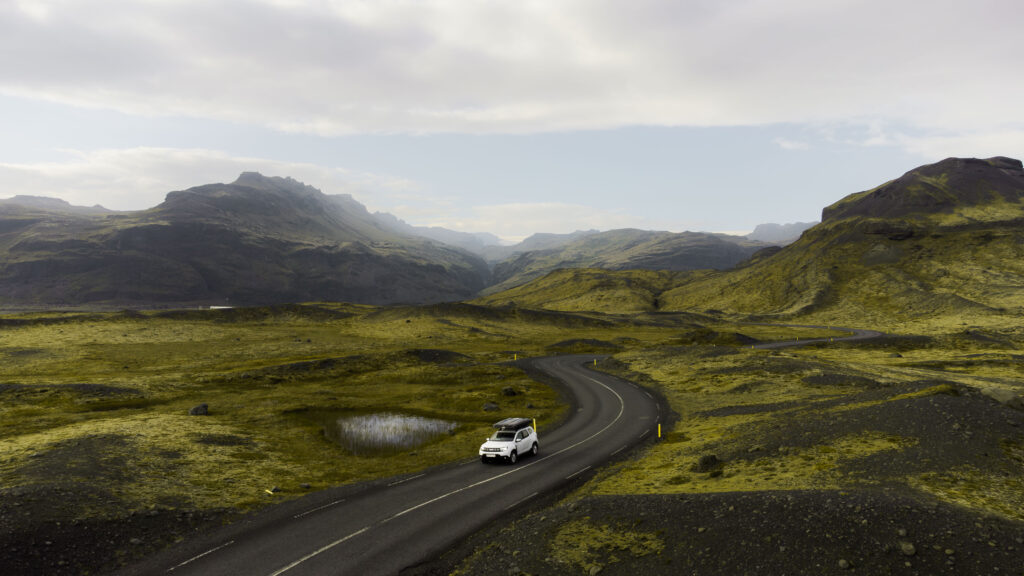
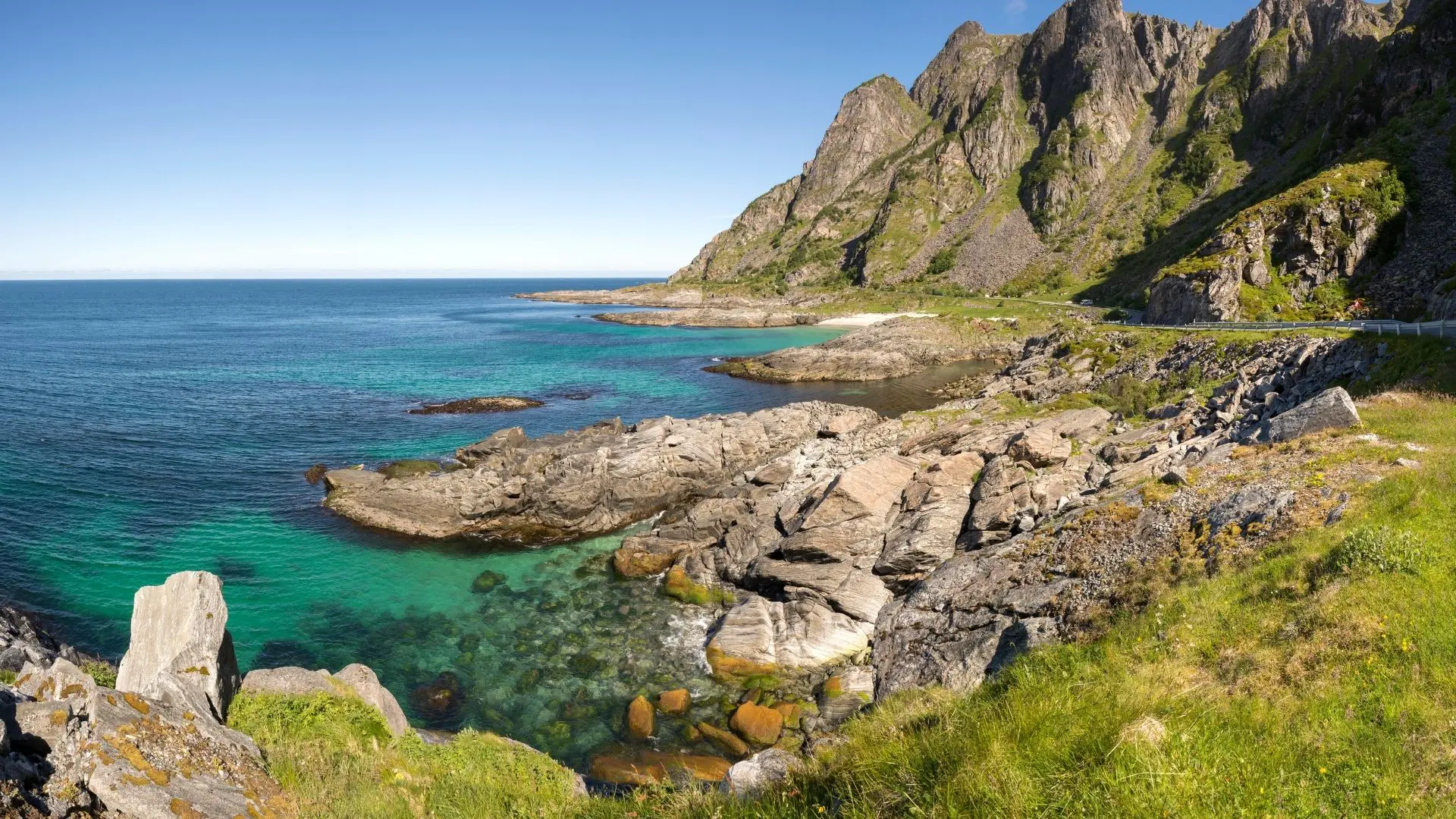
Driving along fjords, waking up to views of snow-capped peaks, and pulling over wherever you like in the evening because the light is just right: for many travelers, a campervan is the ultimate way to explore the Lofoten Islands. But traveling through this rugged part of Norway by campervan comes with its own set of rules.
This article covers everything you need to know before setting off, from the advantages over renting a car and staying in hotels to the rules for camping in the Lofoten Islands, as well as the best time to visit and current fuel prices. That way, you'll be all set for your next Lofoten holiday!
Tips from the Lofoten Nomads team
- The roads in the Lofoten Islands are narrow and winding, so expect a lower average speed than you’re used to at home.
- Some islands are only accessible by ferry, so check the sailing times in advance, especially outside the high season. Be sure to book your tickets well ahead of time too.
- The easiest option is to stay at campsites, especially during the high season. Book well in advance, or rely on a travel company such as Lofoten Nomads, which reserves your spots for you.
- Fill up your water tank and empty your wastewater at the designated facilities at the campsites, never out in nature.
- Watch out for wildlife on the road, especially early in the morning and at dusk.
- Always pack an extra set of warm clothes, even if you’re heading to the Lofoten Islands in summer.
Campervan vs. rental car and hotel: why the campervan wins
Renting a car and staying in hotels may seem simpler on paper, but in the Lofoten Islands, you’ll quickly run into a few practical limitations:
- hotels and guesthouses are in short supply,
- they’re often far apart,
- they fill up in no time during peak season,
- and you pay for each night separately, while the most beautiful spots are often tucked between villages, with no hotel anywhere nearby.
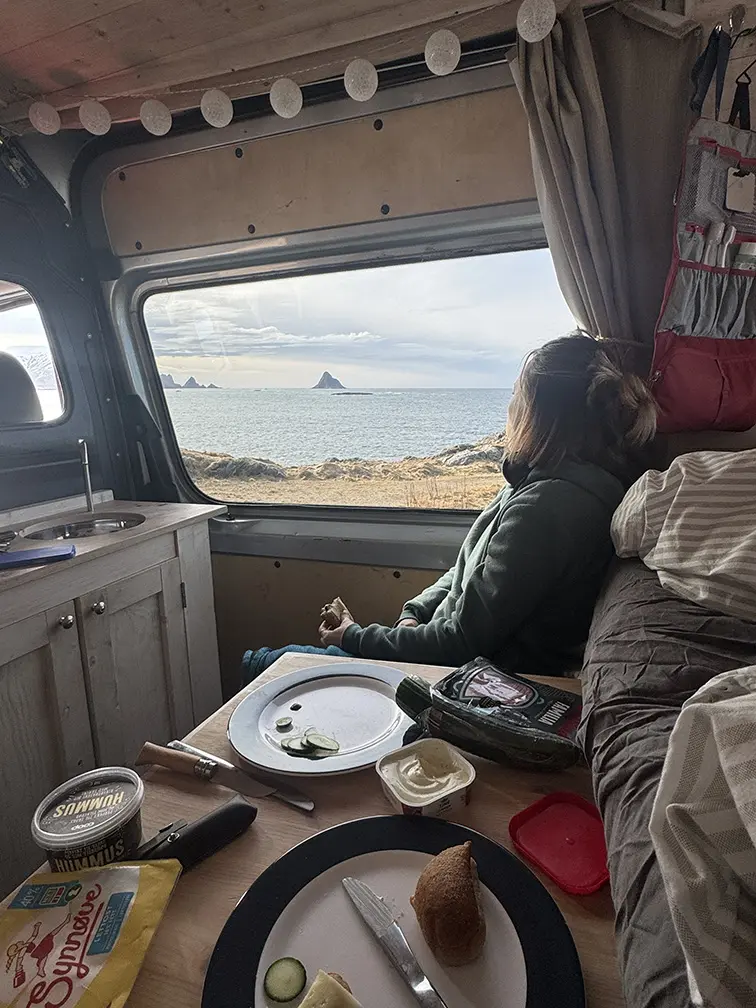
With a campervan, you’re free to travel at your own pace. Stop whenever you spot a great view, cook yourself a hot meal after a day of hiking, and wake up right by the beach or at the foot of a mountain instead of in an anonymous hotel room. You’ll also save a lot on accommodation, since you sleep and travel in the same vehicle. If you really want to experience Norway’s Lofoten Islands rather than simply drive through them, a campervan is simply the better choice.
TIP: With a travel company like Lofoten Nomads, you can easily rent a campervan, including stays at campsites in nature, planned routes, and all the cooking and camping gear, for a very affordable price. That way, you won't have to worry about a thing.
The best time to explore the Lofoten Islands by campervan
The summer months, from June through August, are by far the best time for a campervan holiday in Lofoten. The roads are fully open, every campsite in Lofoten is staffed, and the midnight sun gives you extra hours for driving or hiking. If you prefer to travel with fewer people around, early June or late August is a good compromise: the days are still long, but the most popular spots are noticeably quieter.
Outside the season, from October to April, travelling by campervan becomes considerably more challenging: many campsites close, the roads can be slippery, and the days are short. For anyone visiting Lofoten, Norway, by campervan for the first time, summer is by far the easiest option.
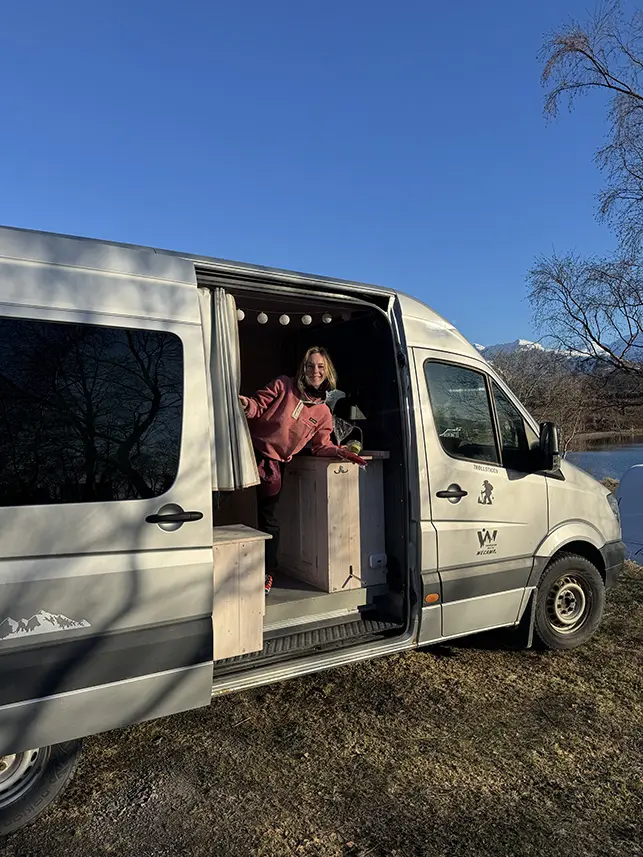
Rules you need to follow
Norway has the Allemannsretten, the right to stay freely in nature, but stricter rules apply to campervans than to hikers camping in tents. Here are a few things to keep in mind:
- You may only park and spend the night on roads and in places that are officially designated for this purpose. Driving off-road or parking on undeveloped land is prohibited.
- Wild camping in the same spot is limited to two nights maximum, and only if you are at least 150 metres from any building.
- In some popular areas, such as around Å, Reinebringen, Haukland Beach and the villages around Reinefjord, wild camping in a vehicle is completely prohibited.
- Never park on farmland or private property without permission.
In short, on the Lofoten Islands, staying at a campsite is often not only the easiest option, but also the only permitted one in many of the most beautiful areas.
Campsites in Lofoten: what you need to know
Every campsite in the Lofoten Islands has its own atmosphere, but most share the same highlights: a spot by the water and mountain views.
Official campsites are scattered throughout the archipelago, from Kabelvåg in the northeast to Å in the far southwest. Most offer electricity, bathroom facilities and sometimes a shared kitchen, and are often within walking distance of the water. During the high season, the most popular sites, especially around Reine and Henningsvær, fill up quickly, so booking in advance isn't just a nice idea, it's essential if you want to secure a great spot.
Fuel and costs
Fuel in Norway is on the expensive side: expect to pay around 20 to 21 kroner (about ’€1.80 to €1.90 per litre) for diesel or petrol. In a campervan with higher fuel consumption, the costs can quickly add up over a longer road trip, so factor this into your budget. Fill up whenever you can, especially before heading into a more remote part of the Lofoten Islands. Outside the larger villages, petrol stations can be farther apart than you might expect.
Lofoten Nomads: travel around worry-free
Prefer not to search for an available campsite in the Lofoten Islands yourself or figure out exactly which rules apply? At Lofoten Nomads, we offer a fully organised campervan package tour through the Lofoten Islands, with campsites reserved for you in advance, all the cooking and camping equipment you need, a planned roadbook, and Dutch-language support 7 days a week. That way, you get all the benefits of a campervan holiday: freedom, flexibility, and unique places to stay, without having to figure out availability or regulations yourself. You drive, and we make sure there’s always a place ready for you along the way.