Tips from the Lofoten Nomads team
- Cook for yourself as much as possible: Norway is expensive, and the Lofoten even more so. It is a remote tourist region. By preparing your own meals, you can cut your food budget to a third.
- Wild camping is legal in Norway. With a view of a fjord or a white sandy beach, you save a huge amount and enjoy an unforgettable experience.
- Fill up before you arrive: petrol stations are scarce on the Lofoten Islands and prices are higher. Fill up in Narvik before you head onto the E10.
- Travel in May or June: fewer crowds, lower prices and the midnight sun starts to appear. The archipelago is stunning before the tourist rush of July.
- Book your campsites in advance: in July the best spots are booked up quickly. With Lofoten Nomads this is already arranged for you.
Lofoten: still Norway
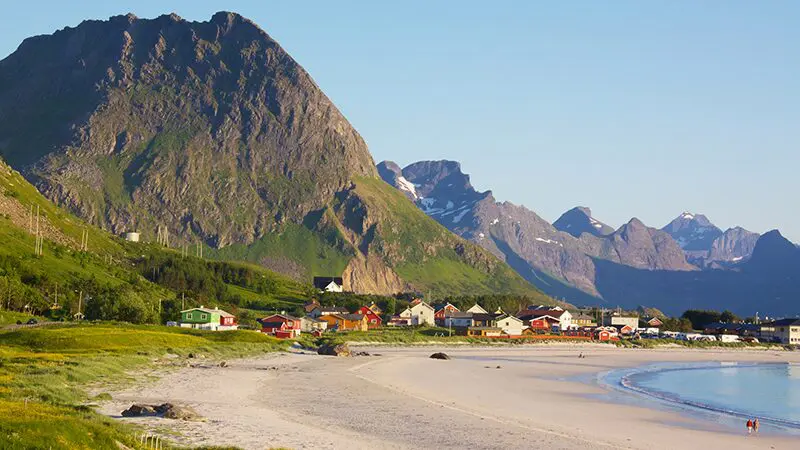
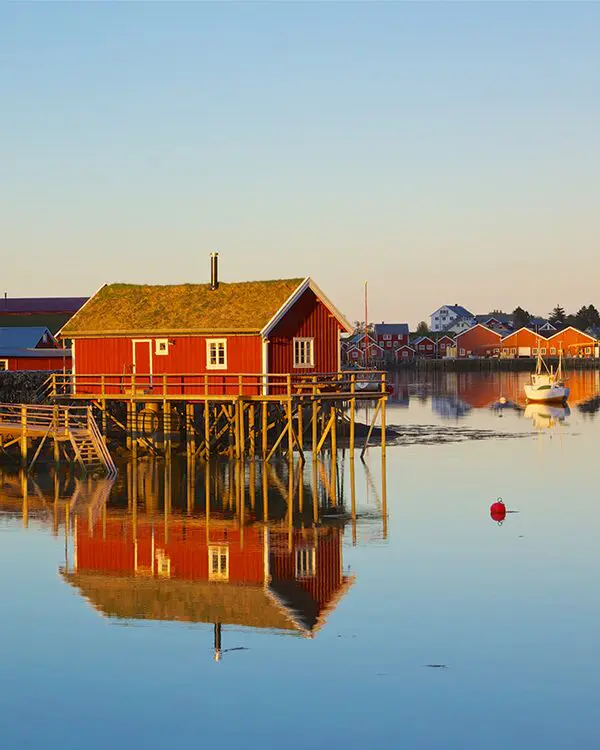
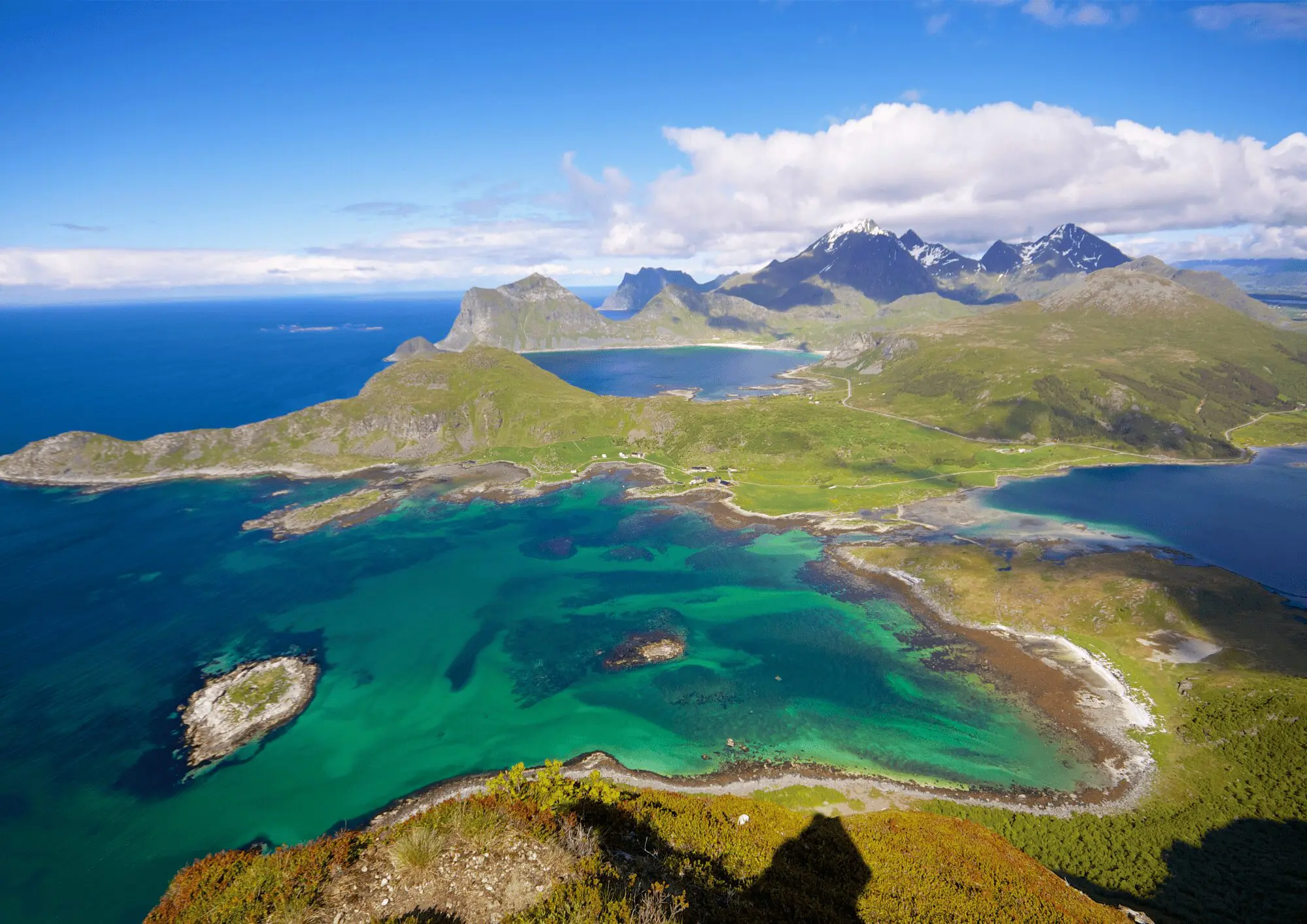
Many travellers describe the Lofoten Islands as one of the most beautiful places they have ever seen. Mountains plunging straight into the Arctic Ocean, red and ochre fishing villages at the water’s edge, and white sandy beaches under a sky that never gets dark in summer. All of this above the Arctic Circle.
But the Lofoten are also Norway, with all the prices that go with it. 🙂 So, how much does it really cost? We give you a clear overview of the budget for a 7-day road trip through the archipelago, broken down by category, with concrete price indications and our best tips for enjoying it to the full without blowing your budget.
The prices are high. But there's good news too!
Norway is one of the most expensive countries in Europe. Wages are high (a waiter earns around €3,500 a month), as are taxes (25% VAT), and the Lofoten are a remote tourist destination where everything has to be shipped in. 👉 The result: prices in restaurants and supermarkets in Reine or Henningsvær are even higher than on the mainland.
The good news is that the most spectacular landscapes are completely free. The beaches of Uttakleiv and Haukland, the view from Reinebringen, the fishing villages, the light of the midnight sun turning everything gold at 11 pm… it costs you nothing. And thanks to the right of public access (allemannsretten), you can spend the night in nature for free.
That is why a road trip along the campsites is the ideal way to discover the Lofoten: you save a lot on accommodation while sleeping in the middle of the most beautiful landscapes of the Arctic.
Transport budget: car and fuel
Renting a car or an all-in road trip
For a road trip to the Lofoten, you have two options:
- 💸 All-in road trip with Lofoten Nomads: transport, reserved campsites, cooking and camping gear and a roadbook in one package. Everything is taken care of, so you can set off straight away.
- 💸💸 Regular car + accommodation: €400–600 for the rental, but count on €900–1,600 for rorbuer (fishermen’s cabins) and campsites. In the end considerably more expensive and much less flexible.
Insurance
Damage insurance is available as an option. On the narrow roads of the Lofoten, often along rocks or the ocean, it is really recommended so you can drive without worries.
Fuel
Petrol costs around 19–22 NOK per litre (€1.65–1.90). Your 7-day road trip, from Narvik to the Lofoten via the E10, covers around 900–1,100 km. With Lofoten Nomads, mileage is unlimited.
With consumption of around 8–11 L/100 km, budget €130–195 (1,500–2,200 NOK) for fuel for two people.
💡 Budget tip: fill up in Narvik before you enter the archipelago. The remote petrol stations on the Lofoten charge higher prices. The Drivstoffappen app compares prices between petrol stations.
➡️ Fuel budget: €130–195
Budget for accommodation: (wild) camping
Official campsites
The 7 nights at campsites are booked in advance and included in the price of Lofoten Nomads. Every campsite has toilets and hot showers. If you’re organising your road trip independently, budget €25–45 per pitch for two people with a vehicle, or €175–315 for the week.
Wild camping
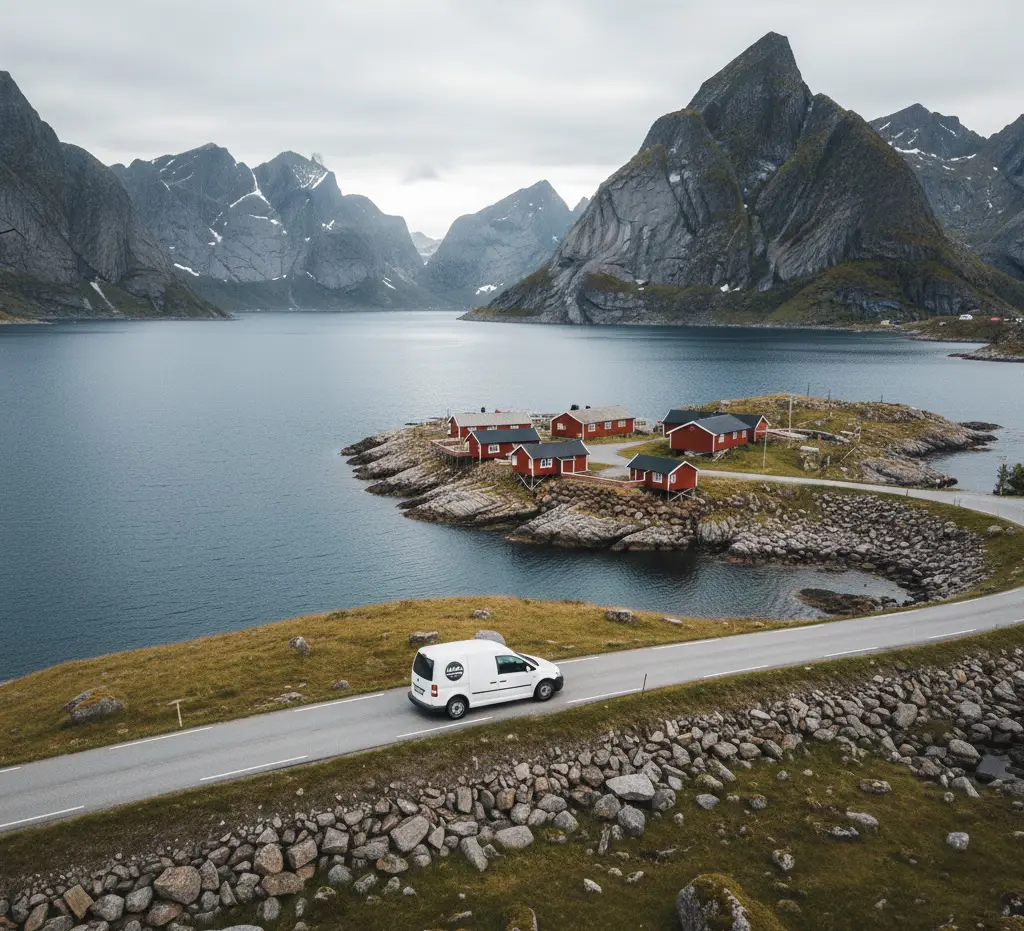
Thanks to the right of access to nature, you can camp in the wild for free, as long as you follow a few simple rules: stay no more than two nights in the same spot, keep at least 150 m from buildings, and stay off agricultural land.
In the Lofoten Islands, that means waking up to views of the Norwegian Sea, surrounded by mountains beneath a sky that barely gets dark in June. Hard to beat.
➡️ Accommodation budget: included with Lofoten Nomads, or €175–315 if you’re travelling independently.
Budget for food & drinks
Eating out on the Lofoten
The Lofoten are a high-end tourist destination, and you can see that in the prices:
- Sandwich in a café: €12–18 (140–210 NOK)
- Meal in a restaurant: €25–45 (290–525 NOK)
- Salmon or cod in a restaurant: €35–55
- Beer: €10–14 (115–160 NOK)
If you eat out twice a day for 7 days, this quickly adds up to €600–800 per person. But you can save a lot on that. 👇
Grocery shopping
The key to keeping your budget under control. Options in the archipelago:
- Coop and Rema 1000 in Leknes and Svolvær: the two larger towns have good supermarkets — do your big shop here
- Spar: in smaller villages, slightly more expensive
- Avoid tourist shops in Reine or Henningsvær: prices are considerably higher here
Grocery budget for 2 people, 7 days:
- Breakfast (bread, brown cheese, coffee, fruit): €8–12/day (90–140 NOK)
- Lunch (sandwiches, tinned food, snacks): €10–15/day (115–175 NOK)
- Dinner (pasta, rice, vegetables, fresh salmon/fish): €18–25/day (210–290 NOK)
Total: €250–370 for two people, or €125–185 per person.
Our tips:
- Stock up right away when you arrive in Svolvær or Leknes. Fresh salmon and cod are delicious and not too expensive in the supermarket.
- Bring a refillable bottle: mountain water is drinkable, free and delicious.
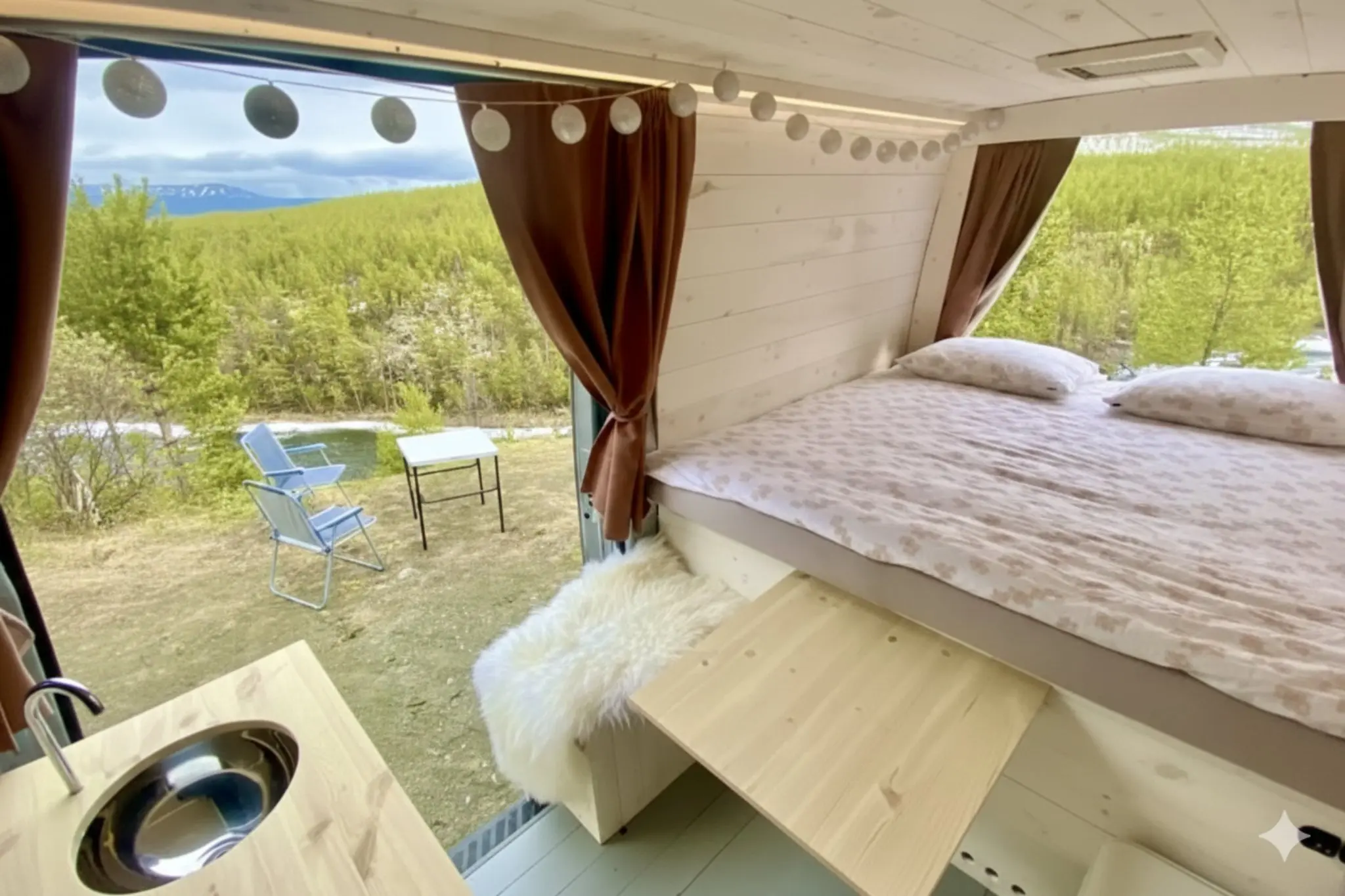
- With Lofoten Nomads you get all the cooking and camping gear to cook comfortably, even in the rain: stove, pots, cutlery… everything is there.
Smart compromise: cook breakfast and dinner yourself, take a sandwich for lunch. Treat yourself to one fish meal in a fishermen’s restaurant — one of the culinary highlights of the archipelago.
➡️ Total budget for food and drink: €250–700, depending on your choices.
Budget for activities: free versus paid
Free activities (and they’re spectacular)
The Lofoten are generous to nature lovers:
- Reinebringen: the iconic hike of the Lofoten. Steps in the rocks, 360° views over fjords and mountains from 448 m. Free. Read our complete guide to the Reinebringen hike.
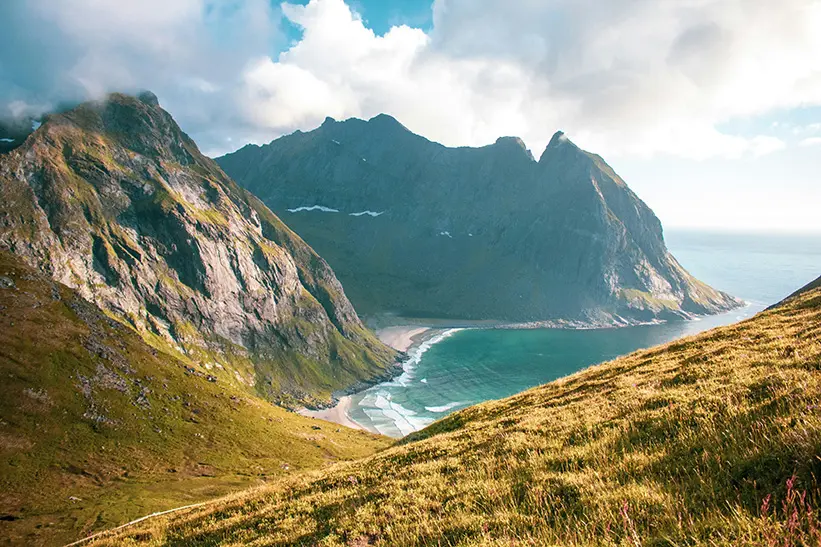
- Beaches: Uttakleiv, Haukland, Ramberg, Kvalvika — white sand, turquoise water and mountains as a backdrop. Free. Discover the 6 most beautiful beaches on the Lofoten.
- Fishing villages: Reine, Henningsvær, Å — picture-postcard villages to explore on foot.
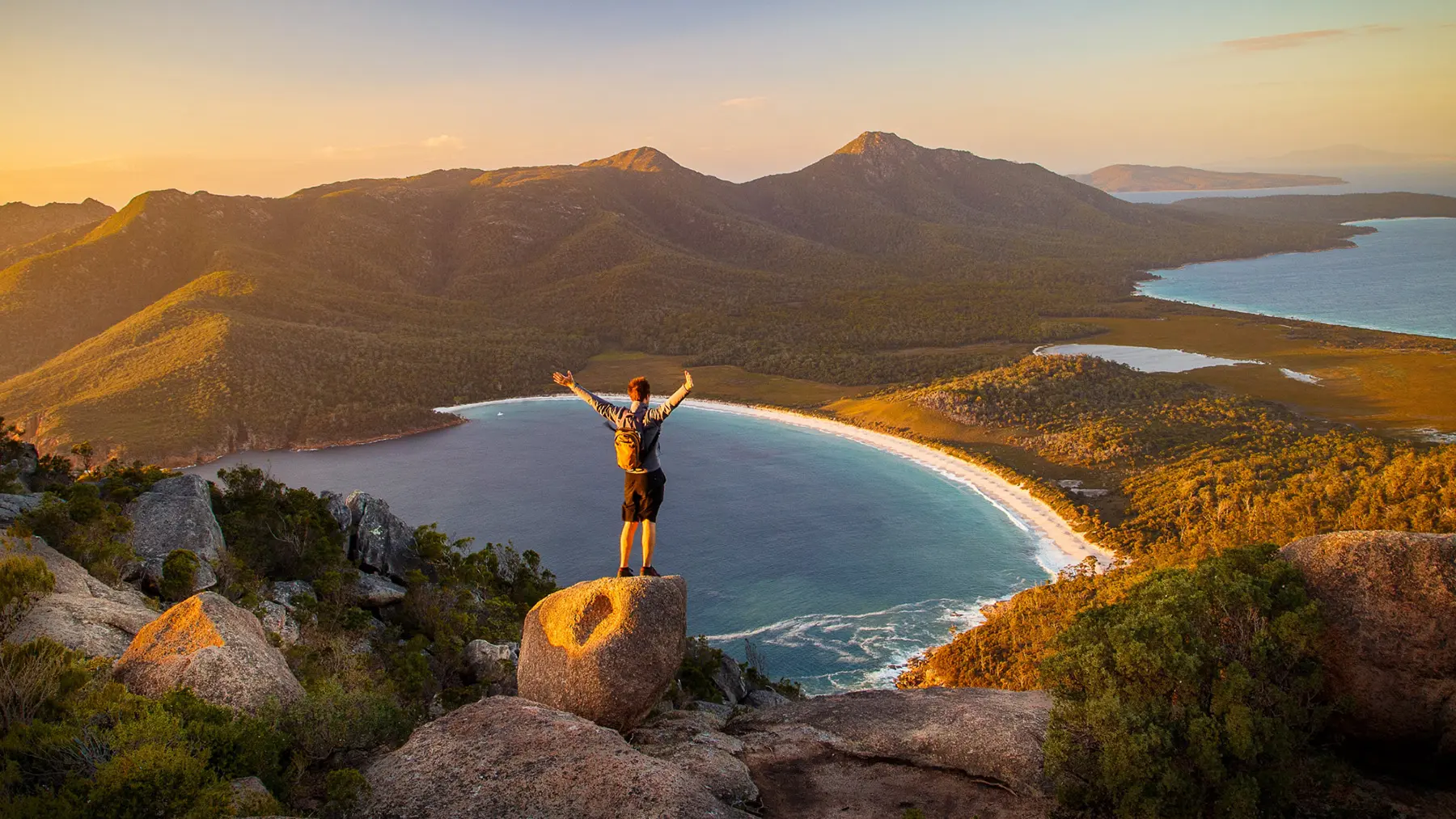
- Midnight sun: from late May to mid-July the sun doesn’t set. Enjoy the golden light at 11 pm from a deserted beach — it costs nothing and you’ll never forget it.
- Vesterålen: the wild dunes of Andenes, unspoilt coastlines — easy to reach during your road trip.
Paid activities
Want to experience even more? These are some bucket-list activities on the Lofoten Nomads programme:
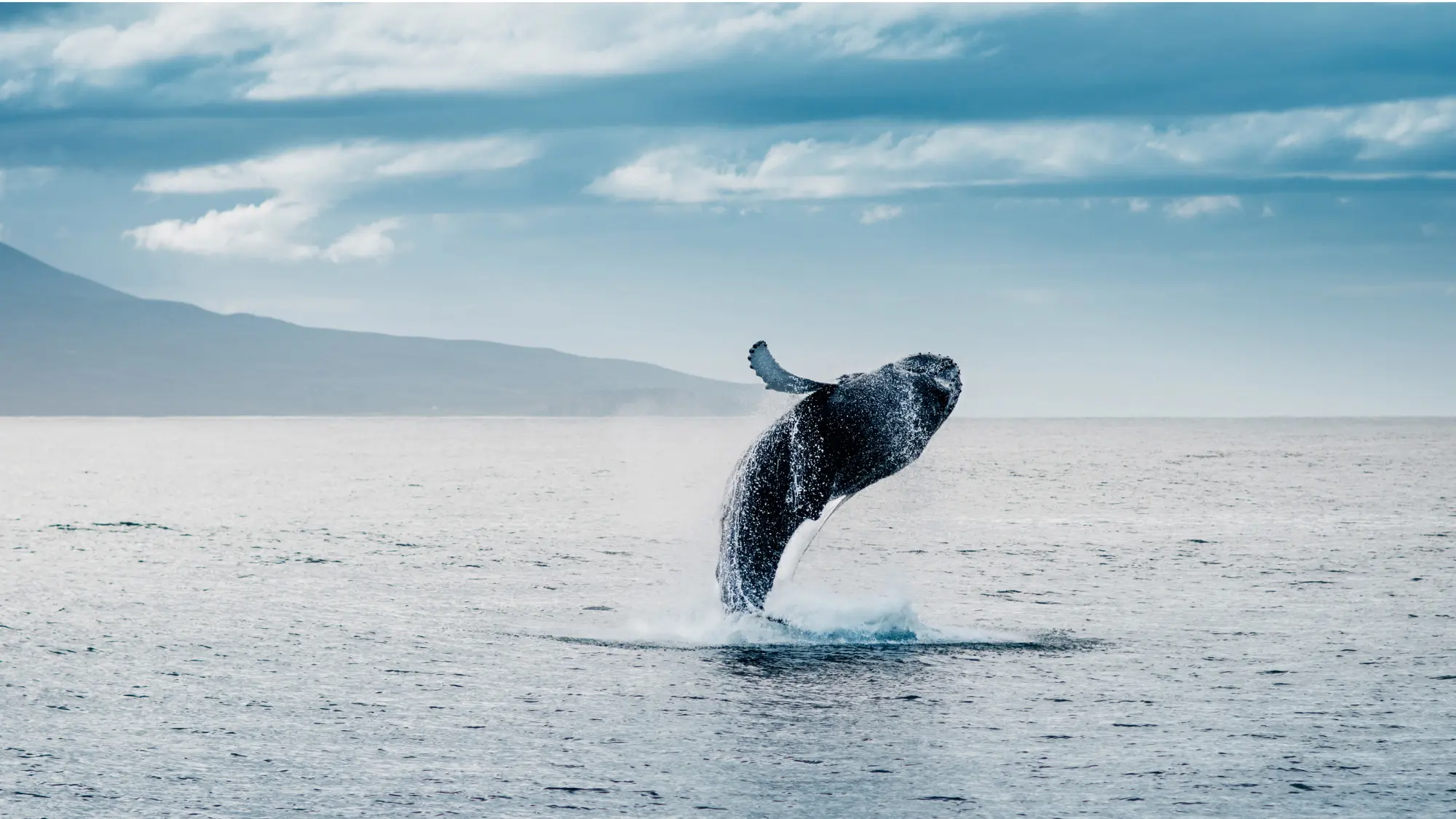
- RIB whale safari in Andenes: a fast boat across Arctic waters, sperm whales, orcas, porpoises. One of the best places in the world to spot whales. Duration: 1.5–2.5 hours.
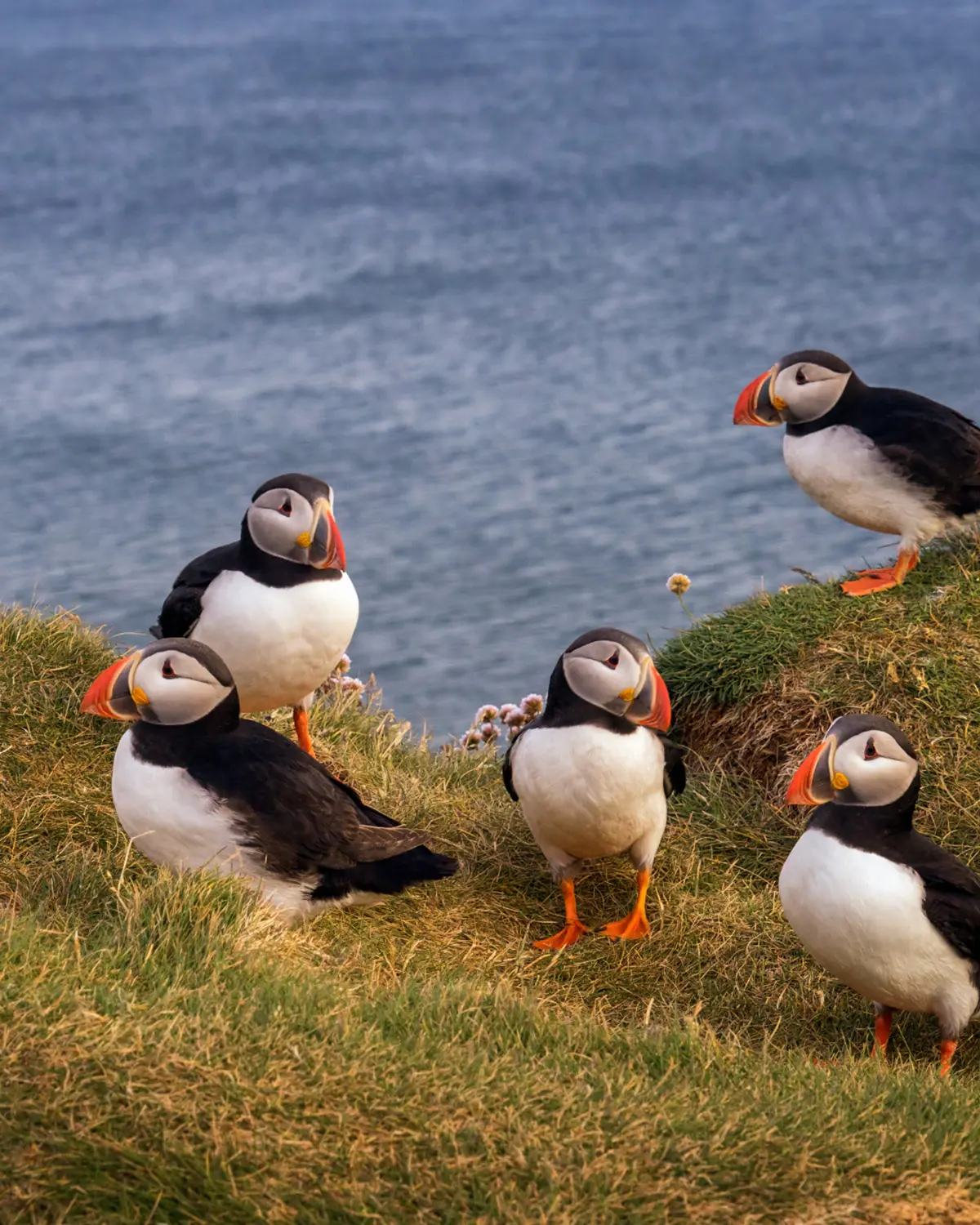
- Puffin spotting in Bleik: a boat trip to see thousands of these “clowns of the sea” breeding on the cliffs. Duration: 1.5–2 hours.
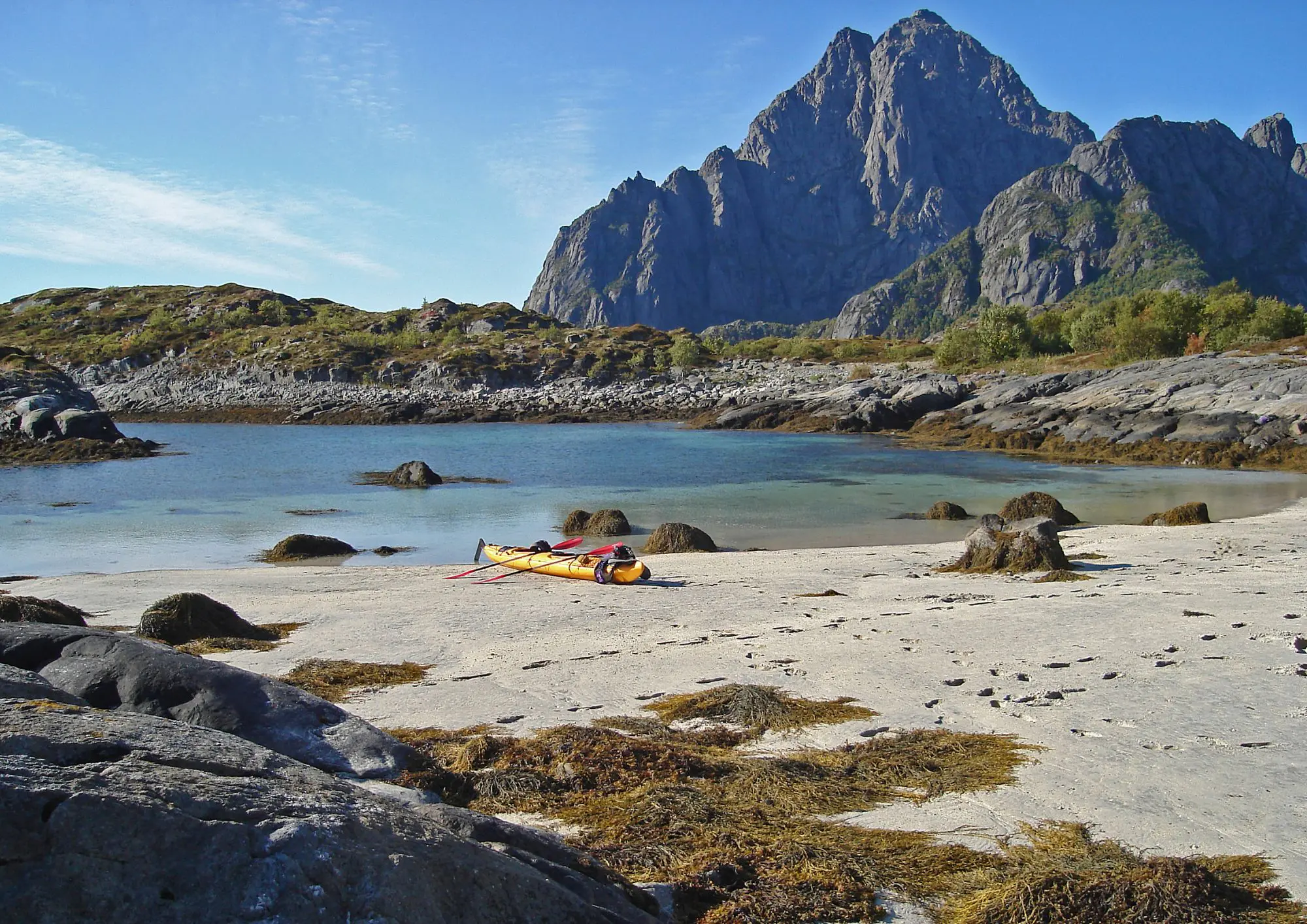
- Kayaking between the fjords in Eggum: paddling at the foot of the vertical Lofoten Wall, with views of the mountains from the sea. Duration: approx. 3 hours.
➡️ Activities budget: €0–300, depending on your interests.
Budget for extras
Ferries
To reach the Lofoten from the mainland, the Bodø–Moskenes ferry is an option if you organise your road trip yourself (around €50–70 for a vehicle + 2 passengers). With Lofoten Nomads you depart from Narvik/Evenes and follow the E10 overland — no ferry needed.
Parking
Most nature spots have paid car parks: €5–15 per day. Reinebringen, Uttakleiv, viewpoints… Parking budget: €30–60 for the week.
Flights
Lofoten Nomads offers return flights from Amsterdam or Brussels to Harstad/Narvik (Evenes). From other cities you pay €150–400, depending on the season. Book in time — flights to Northern Norway fill up quickly in summer.
Contingency budget
Set aside €100–200 for unexpected costs: an extra tank of fuel, a restaurant you really want to try, a souvenir made of Lofoten wool…
➡️ Extra budget: €150–350.
Your budget based on 3 scenarios
On top of the road trip itself, depending on your travel style, budget for the following extra costs:
Scenario 1: You optimise your budget without skimping on the experience:
- Fuel: €140
- Food (groceries + 1 restaurant): €280
- Extras (parking, buffer): €130
- Optional: puffin spotting
➡️ Extra costs for 2 people: around €550, or €275 per person.
Scenario 2: The ideal balance between comfort and budget:
- Fuel: €165
- Food (groceries + 2–3 restaurants): €400
- Extras: €200
- Optional: puffin spotting and kayaking
➡️ Extra costs for 2 people: around €765, or €383 per person.
Scenario 3: You don’t want to cut back on anything:
- Fuel: €195
- Food (groceries + regular restaurants): €700
- Extras: €300
- Optional: whale watching, puffin spotting and kayaking
➡️ Extra costs for 2 people: around €1,195, or €598 per person.
Our best tips to save money
On transport:
The roads on the Lofoten are narrow and winding. Drive slowly: you’ll see more and use less fuel. With Lofoten Nomads, mileage is unlimited, so no stress.
On accommodation:
Legal wild camping on the Lofoten is a rare opportunity. A night overlooking the Atlantic Ocean with mountains in the background is something you’ll hardly find anywhere else.
On food:
Do your big shop as soon as you arrive in Svolvær or Leknes. In the small tourist villages, prices shoot up. With the cooking and camping gear from Lofoten Nomads, you can cook anywhere. Make the most of it.
On activities:
The most beautiful experiences on the Lofoten are free: Reinebringen, the beaches, the midnight sun… Save your budget for 1–2 truly unforgettable activities.
The right time:
May–June is our favourite time on the Lofoten. Campsites are quiet, the roads are empty, and the midnight sun starts to appear. Prices are also friendlier than in July. Read more about the best time to visit the Lofoten.
An all-inclusive package, how much does that really cost?
With Lofoten Nomads you choose a fully organised package.
Included:
- Your own transport for 7 days, with unlimited mileage
- All cooking and camping gear (sleeping bags, pillows, table, chairs…)
- 7 nights at reserved campsites with sanitary facilities and hot showers
- Printed roadbook with the full itinerary and tips
- Mobile app with an interactive map
- 24/7 support before and during the trip
What you still arrange yourself:
- Flights to Harstad/Narvik (Evenes), which you can add through Lofoten Nomads from Amsterdam or Brussels
- Fuel (€130–195)
- Food (€125–185 per person if you cook yourself)
- Optional activities
- Extras (parking, souvenirs)
The advantage: your campsites are already booked, your transport is waiting at the airport and you get the roadbook as soon as you arrive. Pick up the keys and your adventure starts right away!
Are the Lofoten really that expensive?
More expensive than mainland Norway, yes. It is a remote tourist destination. But with the right approach – campsites, supermarket groceries, wild camping… – you can explore the archipelago without going over your budget.
That is a reasonable budget for one of the most spectacular landscapes in the world. The Lofoten are like nothing else: mountains plunging into the sea, Arctic beaches, the light of the midnight sun. In our view, the experience is worth every euro.
👉 Convinced? Book your road trip to the Lofoten with the travel experts at Lofoten Nomads. We arrange everything for you.