
Tips from the Lofoten Nomads team
- Ideal period: May to September for the midnight sun and the best weather conditions on the Lofoten in Norway.
- Camping rules: Wild camping is allowed thanks to the Norwegian “allemannsretten”, but of course respect the nature of the Lofoten and leave no trace.
- Essential gear: Warm clothing and a rain jacket are a must, even in summer.
- Safety: Mountain roads on the Lofoten can be narrow and steep. Drive carefully and always let someone know your route.
- Local respect: Never park on private land or in front of farm driveways, and always take all your rubbish back with you.
- Trust the experts at Lofoten Nomads. The team knows the Lofoten Islands like no one else and has mapped out an optimal route past the most beautiful campsites.
Camping in Lofoten: What You Absolutely Need to Know Before You Go
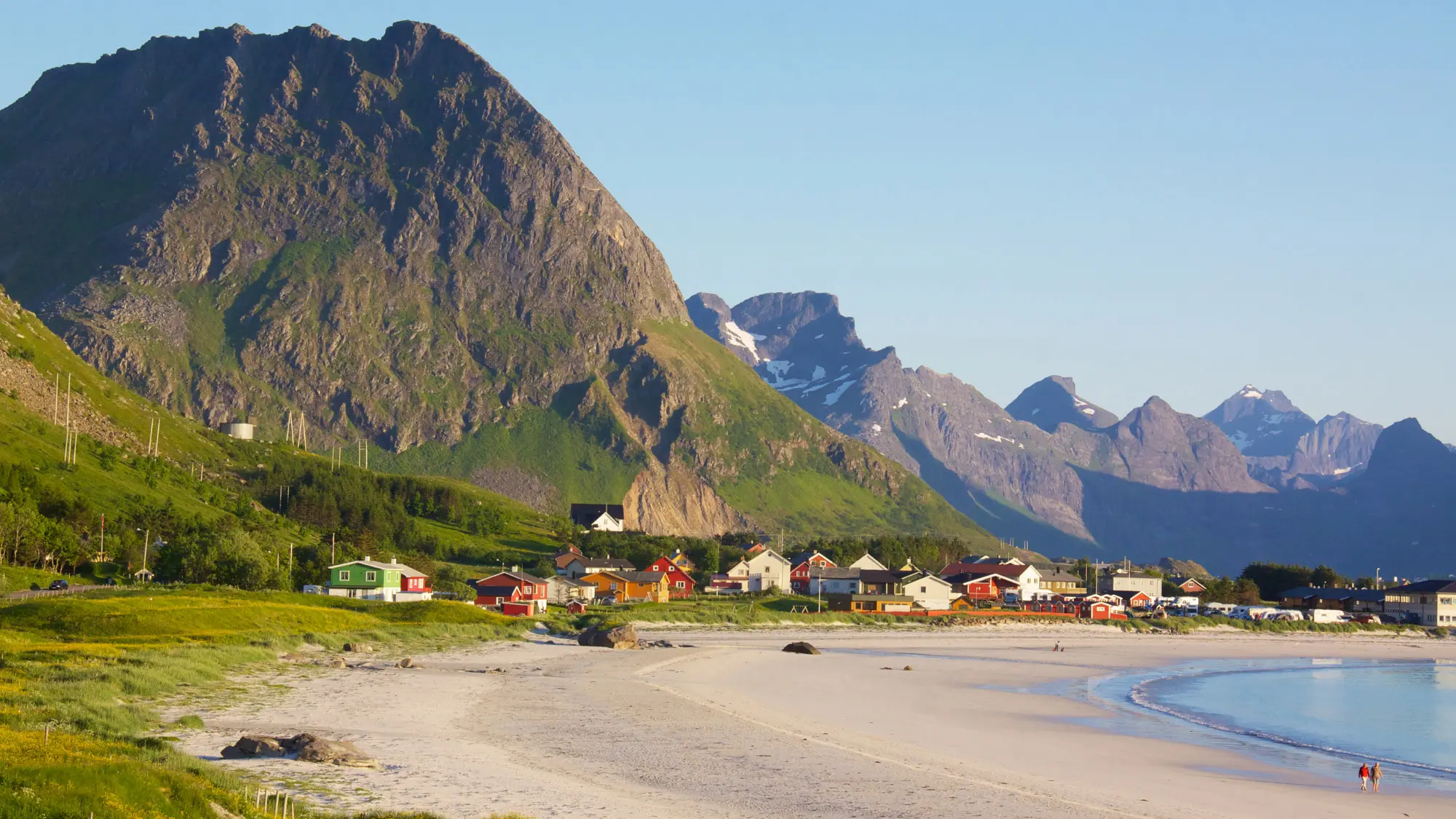
The Lofoten mean dramatic mountain peaks rising straight out of the icy sea and picturesque fishing villages in bright red and yellow. Imagine waking up with a view of a mirror-smooth fjord, somewhere between Svolvær and the Trollfjord, and that this is your reality every morning. Now that’s a holiday.
The Lofoten in Norway are one of the most spectacular destinations in Europe, and a road trip along the campsites is by far the most beautiful way to explore these islands.
But note: camping on the Lofoten takes some preparation. Read everything you need to know here.

When to go camping in Lofoten?
The perfect season
From May to September is the ideal period for a camping road trip on the Lofoten. Temperatures range between 12 and 20°C. Fresh but pleasant, perfect for exploring the islands’ fjords, beaches and mountain trails. Read more about the climate month by month in our article on the best time to visit the Lofoten.
The absolute highlight of your holiday on the Lofoten is the midnight sun: from late May to mid-July the sun doesn’t set on the Lofoten. Camping in that golden, endless evening light, with the silhouette of Svolvær or the walls of the Trollfjord in the background.
The rules about camping in the Lofoten Islands
What is allowed?
Good news: Norway has one of the most relaxed camping rules in the world, thanks to the so-called allemannsretten, the right for everyone to roam freely in nature and camp overnight. In the Lofoten, this means that you can basically camp anywhere in the untouched nature, as long as you stay at least 150 meters away from the nearest inhabited house or cabin. You can stay at the same spot for a maximum of two consecutive nights without asking for permission. Prefer to sleep at an official campsite? That's also an option; there are plenty of choices with the necessary basic facilities.
What is prohibited?
- Never park or camp on private land without permission.
- Respect restricted areas in and around protected nature reserves.
- Do not leave any litter behind. The Lofoten are still largely untouched, and they want to keep it that way.

Essential gear for your road trip through the Lofoten
Clothing
The Lofoten in Norway are known for their unpredictable weather. Even in summer, the weather on the Lofoten can change in no time from bright sunshine to lashing rain and strong winds.
Always bring several layers: a good thermal layer, a fleece, a waterproof rain jacket and sturdy hiking boots are absolutely essential for a road trip on the Lofoten. The wind from the sea can be quite strong, especially on the higher mountain trails above Svolvær and along the Trollfjord.
Navigation and connectivity
The mobile network in the Lofoten is pretty good along the main routes, but as soon as you head into the mountains or drive to remote beaches, the signal may drop. So be sure to download offline maps of the Lofoten before you leave; they can make a difference when you need them the most.
Also, keep in mind that GPS signals can sometimes be less reliable in narrow fjords or deep valleys. A combination of digital navigation and a good paper map is definitely not a luxury. This way, you can reach the most remote spots on the island, like the route to Trollfjord, without any worries.
Water and supplies
Most villages on the Lofoten have supermarkets or small grocery shops. Svolvær and Leknes are the largest towns with a full range. In remote parts of the islands the distance to the next shop can be greater, so make sure you always have enough drinking water and basic supplies with you. You’ll find more practical tips in our guide to a road trip on the Lofoten. At the local markets on the Lofoten you’ll find fresh fish, cod and local products you won’t taste anywhere else.

Where to camp in the Lofoten: the most beautiful spots
By the water: fjords and beaches
Reinefjord is probably the most beautiful place to stay overnight during your trip around the Lofoten Islands. Surrounded by sharp mountain peaks and reflected in the ice-blue water, this fjord, like the world-famous Trollfjord, offers a view you won’t soon forget. In the evening, set up your camping chairs outside and watch the light slowly glide across the mountain slopes of Norway’s Lofoten Islands.
Bunes Beach, accessible via a short boat ride and hike from Vindstad, is the most beautiful beach in the Lofoten Islands. The white sand, turquoise water and absolute silence make it a special place to spend the night during your holiday in Lofoten. Set aside a morning for it: sleep nearby, take the first boat and be among the first to walk across the untouched sand. You’ll find even more beautiful seaside spots in our guide to the 6 best beaches in the Lofoten Islands.
Trollfjord: a boat trip through a legend
A must-do during your road trip is a boat tour through the Trollfjord. This narrow, dramatic fjord, only 100 meters wide at the entrance and surrounded by vertical walls over 1,000 meters high, is one of the most impressive spots in all of Lofoten. The Trollfjord is best accessed by boat from Solvær. Camp at a Lofoten campsite near Solvær and set off early in the morning for the most surreal experience.
In the mountains and valleys
The area around Nusfjord offers rustic places to stay in an authentic Norwegian setting. This traditional fishing village is one of the best preserved on the Lofoten, and the silence in the surrounding valleys is almost tangible, one of the hidden highlights of any Lofoten road trip.
If you love heights and adventure, look for a higher viewpoint in the area around Reine. From here you have a panoramic view over the surrounding islands, with the sea on all sides and the peaks as a natural backdrop. On clear summer evenings, this is the ideal place to enjoy the midnight sun.

Campsites Lofoten: official or in the wild?
On a camping holiday on the Lofoten you have a choice: do you sleep at an official campsite or look for a spot in open nature where overnight stays are allowed? Note: the allemannsretten mainly applies to people camping with a tent, and more and more places on the Lofoten have no-camping signs. Both options have their charm.
Most campsites on the Lofoten generally have showers, electric hook-ups and sometimes even a small kitchen. They are often in stunning locations, right by the water or at the foot of the mountains. Wild camping, on the other hand, gives you a freedom and sense of adventure that no campsite can match.
Safety and practical tips
Respect for nature and community
Always ask for permission before parking on private property. The local people in the Lofoten in Norway are generally friendly and welcoming, but be sure to respect their property and their peace. Shop for your daily groceries in local stores; there are excellent local spots in Svolvær as well, and dine at family-run restaurants. This way, you support the local community and make your vacation in the Lofoten even more authentic.
Take all your trash back with you. The Lofoten in Norway are still largely unspoiled wilderness, and that's exactly why it's so beautiful. Leave no trace, completely extinguish campfires, and leave nature as you found it.
Preparation and safety on the road
The roads in the Lofoten in Norway are generally well-maintained, but they can be narrow and winding. Some tunnels and roads require extra attention, especially on your way to the Trollfjord or the mountain passes above Solvær. Drive carefully, take your time, and enjoy the scenery.
Always let someone know your planned route for the day, especially when you’re hiking in the mountains. The emergency services in the Lofoten are efficient, but it may take some time for assistance to arrive in remote areas.
Logistics: driving in the Lofoten in Norway
The route on the island
The E10 is the backbone of every Lofoten road trip. This road runs from the bridge at Fiskebøl in the north all the way to the endpoint Å in the south, a distance of about 170 kilometers, with an almost endless series of breathtaking views. Every turn reveals a new fjord, a new village, or a new mountain panorama on the Lofoten islands. The starting point Svolvær is ideally located along this route, within driving distance of both the Trollfjord and the southernmost villages of Lofoten, Norway.
When the adventure gets even better...
A camping holiday on the Lofoten is more than an ordinary trip. It is a total immersion in one of the most beautiful landscapes in Europe, past fjords, mountain peaks and fishing villages that have stood the test of time. From the bustling harbour of Svolvær to the eerie silence of the Trollfjord, the Lofoten in Norway touch you in a way few other destinations can match.
Want an adventure on the Lofoten but don’t feel like planning everything yourself? With the Lofoten Nomads road trip, everything is already arranged for you: a fully planned route, reserved campsites and a detailed roadbook so you can enjoy your holiday without a care.